
Research Radio
Research Radio brings academic rigour to ask and address complex questions. Our show lets you learn directly from researchers who are at the forefront of their fields, investigating topics ranging from food security programmes to queer rights legislation.
Episodes

EPW Conversations- The Great Nicobar Project: A Holistic Folly
The Project for Holistic Development of Great Nicobar Island, a large-scale infrastructure project, is more folly than national gain. The project remains a purely commercial endeavour built on large-scale destruction of the ecologically pristine islands and the alienation of their indigenous people. In this edition of EPW Conversations, we speak with Pankaj Sekhsaria, researcher and author with th

Kāvyaśāstra and Censorship in Premodern India
On this episode of Research Radio we have Sreenath V S and Mini Chandran discussing their paper To Write Was to Cense: Kāvyaśāstra and Creative Freedom in Premodern India
Sreenath V S teaches at the Department of Humanities and Social Sciences, IIT Madras. Mini Chandran teaches at the Department of Humanities and Social Sciences, IIT Kanpur..
For more episodes and to listen to EPW's other podcast
The First Bible Women of Rayalaseema
On this episode of Research Radio we have Chakali Chandra Sekhar discussing his paper titled “Dalit Women and Colonial Christianity: First Telugu Bible Women as Teachers of Wisdom”. Chakali Chandra Sekhar is currently working as a lecturer in English at SRR & CVR Govt Degree College, Vijayawada, in Andhra Pradesh, India.
For more episodes and to listen to EPW's other podcast Supplement he
Crisis and change in the world and in the United States
On this episode of Research Radio we have Inderjeet Parmar discussing his paper titled “Poly Crisis or Organic Crisis?: The Crisis of the United States and the US-led World Order”. Inderjeet Parmar teaches international politics at City, University of London.
For more episodes and to listen to EPW's other podcast Supplement head to https://www.epw.in/podcasts
Subscribe to EPW to access all o
Rethinking India's Agricultural Extension System
On this episode of Research Radio we have A Suresh discussing his paper titled "Reinventing Agricultural Extension System in India: The Road Ahead" which he co-authored with V K Sajesh, R N Padaria, and A K Mohanty. Dr. A Suresh is Principal Scientist and Professor of Agricultural Economics at the Indian Council of Agricultural Research – Central Institute of Fisheries Technology in Koch
Evaluating India's Entrepreneurship Policy
On this episode of Research Radio we have Anish Tiwari discussing his paper titled “The Good, the Bad, and the Ugly of ‘Startup India": A Review of India’s Entrepreneurship Policy” which he co-authored with Teresa Hogan and Colm O’Gorman.
Anish Tiwari is a former Marie S Curie doctoral fellow, Dublin City University, Ireland. He is currently Senior Associate at PWC, Ireland.
For more epi
Understanding Urban Digitalisation Projects in India: Platformisation, Infrastructuring, and Datafication
On this episode of Research Radio we have Khaliq Parkar discussing his paper titled “Platformisation, Infrastructuring, and Datafication: Regional Variations in the Digitalisation of Indian Cities” which he co-authored with Marie-Helene Zerah and Gaurav Mittal.
Khaliq Parkar is with the Centre d’études en sciences sociales sur les mondes africains, américains et asiatique (CESSMA) Université Par
Brahminical Environmentalism and Conservation Laws in India
In this episode of Research Radio, we have with us Sanjana Meshram and Aditya Rawat discussing conservation law in India and how it perpetuates Brahminical environmentalism. Today's discussion is based on their paper titled "Entrenching Brahminical Conservation: An Analysis of the Wild Life (Protection) Amendment Act".
Sanjana Meshram is a lawyer and heads the litigation team at the
Special Episode: Review of Urban Affairs 2023
Over the past 12 years the EPW Review of Urban Affairs has tried to be a finger to the pulse of Urban Studies in India. In this special episode of Research Radio we speak with two members of the advisory group of the Review of Urban Affairs, Dr. Karen Coelho and Dr. Anant Maringanti, to look back at the RUA over the years and discuss the papers in the most recent edition.
Karen Coelho is with the
Indian Labour Intermediaries and Global Production Networks
In this episode of Research Radio, we have with us Dr. Keshab Das to discuss the changing role of intermediaries in the relationship between labour and capital as Indian labour gets increasingly integrated into global production networks based on his paper "Labour Agency and Global Production Networks in India: Intermediaries—Old and New".
Dr. Keshab Das is Visiting prof at the institut
Dalits and the Environmental Movement in India
In this episode of Research Radio, we have with us Prof. Mukul Sharma who will be discussing his work on Dalits and the environmental movement in India based on his papers titled "The Making of Moral Authority: Anna Hazare and Watershed Management Programme in Ralegan Siddhi", "The Vrindavan Conservation Project" and "Dalits and Indian Environmental Politics". Prof. M
Electoral Politics in ‘Jatland’: The Changing Political Landscape in Haryana
In this episode of Research Radio, we have with us Dr. Radhika Kumar, who will be discussing the changing political landscape in the ‘Jatland’ of Haryana. This discussion is based on her papers titled ‘Saffronising 'Jatland': Mapping Shifts in the Electoral Landscape in Haryana’, ‘Stooping to Conquer: Jats and Reservations in Haryana’, ‘Why a Nationalist Rhetoric Failed the BJP in Haryana’
Debt and Service: The Logic of Caste
In this episode of Research Radio, we have Rajat Roy discussing his research on Dalit Political Subjectivity. In his papers titled "From Postcolonial Irony to Dalit Truth: A Perspective on Experience" and "Politics of Identity Contra Anti-caste Social Visions: The Matua Problem and Beyond," he highlights the uniqueness of Hindu life world and the social practices of castes. He
COVID-19 Vaccine R&D and Manufacturing in the US and in India - Part 2
This time on Research Radio we have with us Prof. Sunil Mani for a two-part episode on COVID-19 vaccine R&D and manufacturing in the US and in India based on his Special Article titled "The Role of Industrial Policy in Market-friendly Economies: Case of COVID-19 Vaccine R&D and Its Manufacturing in India and the US—I" and "The Role of Industrial Policy in Market-friendly Economies: Case of
COVID-19 Vaccine R&D and Manufacturing in the US and in India - Part 1
This time on Research Radio we have with us Prof. Sunil Mani for a two-part episode on COVID-19 vaccine R&D and manufacturing in the US and in India based on his Special Article titled "The Role of Industrial Policy in Market-friendly Economies: Case of COVID-19 Vaccine R&D and Its Manufacturing in India and the US—I" and "The Role of Industrial Policy in Market-friendly Economies: Case of
Caste Among School Children in Maharashtra
On this episode of Research Radio we have Sameer Mohite discussing his research on Caste among School Children in Maharashtra. In his papers titled "Critical Thinking on Caste among Schoolchildren in Maharashtra: Case Study of Two Schools in Chiplun" and "Caste amongst Schoolchildren: A Response" he discusses whether schools have been successful in encouraging children to overcome cast
Socio-cultural Factors and Mental Health in India
On this World Mental Health Day we bring you a conversation with Sudarshan Kottai on Mental Health in India and it’s entanglements with socio-cultural factors both in the provision of mental healthcare as well as within the institutions of mental health themselves.
Sudarshan Kottai teaches at the Jindal School of Psychology and Counselling, OP Jindal Global University, Sonipat and has published se
Left Resurgence in Latin America
In this episode of Research Radio we speak to Tathagatan Ravindran about the rising ‘pink tide’ in Latin America based on his papers in EPW titled “Bolivia at the Crossroads”, “Neo-liberal Restoration at the Barrel of a Gun: Dissecting the Racist Coup in Bolivia”, “Return of the Left in Bolivia: Social Movements and Popular Power”, and “The Left Victory in Colombia: From Resistance to Power” . He
Race, Caste, and Class
In her book 'Caste: The Origins of Our Discontents' Isabel Wilkerson looks to the Indian caste system to provide the vocabulary to expose the invisible substructure underlying race in America. Wilkerson draws comparisons between Racism in America and Caste in India in the way certain logics and practices - such as purity-pollution and endogamy - are used to establish one's status, access to resour
Contemporary Capitalism and the 4th Industrial Revolution
In this episode Atul Bhardwaj discusses his papers on Contemporary Capitalism and the 4th Industrial Revolution. The first paper titled 'Decay of Liberalism and Withering Away of the Left: Fourth Industrial Revolution' talks about how the technology-driven revolution is fundamentally affecting the relationship between capital and labour. And how this change is driving right-wing populism across th

Criminalisation of Vimukta Communities: The Role of Police and Judiciary
The FIRs filed to regulate the sale and consumption of alcohol follow a curious template in Madhya Pradesh, our guests from today’s episode found. An FIR is likely to begin with a tip from an anonymous informant. Police officers would then reach the “crime site” and find that the accused does not have the appropriate licence to sell liquor. On paper, the section they are charged under is about reg
Setting the Record Straight on Birsa Munda and His Political Legacy (Part- II)
Although the role of Birsa Munda has been seminal in championing the Adivasi cause, his political movements and legacy have been distorted, like other prominent Indian historical figures, including B R Ambedkar and M K Gandhi. Despite misrepresentations, Birsa Munda and his politics continue to inspire not just Adivasis but also Dalits and other marginalised sections in their pursuit of attaining
EdTech Platforms: Transforming India's Educational Spaces?
Byju’s is likely to be the first name that pops into our heads when we think of the words online education and EdTech. While online education was once seen with doubt, Byju’s has reported consistent growth in users and the pandemic has given them a turbo boost. What are the implications of EdTech companies in changing how students learn and grow? What types of partner
Setting the Record Straight on Birsa Munda and His Political Legacy (Part- I)
Although the role of Birsa Munda has been seminal in championing the Adivasi cause, his political movements and legacy have been distorted, like other prominent Indian historical figures, including B R Ambedkar and M K Gandhi. Despite misrepresentations, Birsa Munda and his politics continue to inspire not just Adivasis but also Dalits and other marginalised sections in their pursuit of attaining
Anti-conversion Legislation in Karnataka
The recent Right to Freedom of Religion Bill, 2021, passed in the Karnataka legislative assembly that claims to combat conversion is a diabolical move by the government to provide legal cover to the majoritarian fundamentalist oppression against minorities.
This podcast is based on the article “Anti-conversion Legislation in Karnataka: BJP’s Responsible Governance or Descent in Communal Chaos?” wh

Diluting Environmental Regulations Under the Guise of Good Governance
In 2012, the Comptroller and Auditor General of India reported in Parliament that the government inefficiently allocated coal blocks and caused a loss of revenue to the tune of Rs 1.8 lakh crore. The period from 2010 to the national elections in 2014 was when “the allocation of natural resources to mainstream economic sectors, especially mining, was politicised like never before.” What did this pr

Namdeo Dhasal’s New Language- A reflection of the conscience of the oppressed
Marathi poet Namdeo Dhasal challenged Brahminical literature and sought to reconstruct a caste-less society through his works.
This podcast is based on the article Namdeo Dhasal’s new language that was published in EPW journal on 27th October, 2018.
Yogesh is a poet, columnist, writer and founder of Panther’s Paw Publication. He is also a PhD scholar at the Tata Institute of Social Sciences. He is

Understanding Gail Omvedt’s Anti-caste and Feminist Research Methodology
Gail Omvedt has published more than 50 articles in EPW. This includes sharp book reviews, innovative research work and critical responses to articles published in the journal. After her death, EPW published reflective articles to understand her contributions. To take this a step further, and to commemorate her legacy, we felt that it could be useful to take a behind-the-scenes look at her research

Dalit Politics: The dilemma of forming a dynamic alliance
In their bid to maintain political visibility, various factions of the Republican Party of India have struck up alliances with "secular" and "non-secular" parties. They have not adequately utilised the progressive undercurrents of the Dalit consciousness to connect with other deprived communities to form a dynamic coalition.
This podcast is based on the article Dalit Politics in Maharashtra that w

Indian Courts and the Politics of Recognising Women’s Unpaid Care Work
Women spend more than three times as much time performing unpaid domestic work than men in India based on 2019 NSSO data. This means women get less time to pursue paid work, learn new skills, get rest, and more. This disproportionate division of labour remains unrecognised. Indian courts, however, have attempted to value women’s unpaid domestic work in cases where women have died or become disable

Will the Insurance Model Save Indian Healthcare?
In 2018, Prime Minister Narendra Modi launched an ambitious plan to achieve universal health coverage in India: by covering medical expenses upto Rs 5 lakh per family for one in every three Indians. The government called the scheme Ayushman Bharat and also promised to revamp the primary health care system alongside the insurance coverage.
How has the Ayushman Bharat scheme fared? Scholars Sylvia K

Sensory Life of Caste in Indian Universities
The classroom can be a space for us to engage in deep learning, rigorous debate, collaboration and critical thinking. It’s a space where our senses can be active and nourished. However, entry into the classroom has been historically limited to upper-caste cis men. What happens when these exclusions are challenged?
This is a bonus episode of Research Radio, where P Thi

Ambedkar in 2021, #7: Notes on Reading Ambedkar
From academic writing to social media, Dr Ambedkar’s scholarship and actions are receiving renewed attention due to the efforts by Dalit-Bahujan scholars and thinkers. This special programme produced by EPW is one specific example of this.
Our guest today has been writing on Dr Ambedkar for several decades, and has more recently focused on frameworks on how to read Ambedkar.

Ambedkar in 2021, #6: What Role Did Ambedkar Envision For the State to Play in Ensuring Equity?
Dr B R Ambedkar has written extensively about economics and development. Along with proposing landmark legislations, he was also attentive to the impact of policies on those from marginalised castes and on women. Our guests will examine the policy landscape in and focus on two landmark programmes— the National Food Security Act’s provisions for maternity entitlements and th

Ambedkar in 2021, #5: Dynamics of the Anti-Khoti Agitations in Konkan Region and Working Class Struggles in Bombay
What does it take to build unity among the working class? We'll explore how Dr Ambedkar led movements in the Konkan region against khots, or landlords, who gave unfair remunerations to tenants, and in the Bombay Presidency in favour of garnering humane working conditions for the working class, including mill workers.
Santosh Suradkar is our guest for this week. Dr Suradkar teaches at the Departmen

Ambedkar in 2021, #4: What Steps Did Ambedkar Take to Empower Women?
What steps did Ambedkar take to counter patriarchy and the caste-based order? Why should laws specifically consider caste in addressing incidents of violence? What role have upper-caste women played in furthering the women's movement in India?
These are a few of the questions that Abhinaya Ramesh explores on this week's episode of Research Radio. Professor Ramesh is a

Ambedkar in 2021, #3: Probing Caste Violence at the Visible, Symbolic, and Structural Levels
What are the implications of studying Dr Ambedkar’s texts in an Indian public university? What are the multiple forms of violence that caste thrives on, and how are these contested? What is the importance of naming, particularly the use of the terms "Harijan," "Scheduled Caste" and "Dalit"?
These are a few of the questions that Parthasarathi Muthukkaruppan explores on this week's episode of Resear

Ambedkar in 2021, #2: What Methods Did Ambedkar Use to Create Transformative Change?
Thanthai Periyar and B R Ambedkar shared several similarities in their analysis of Indian society. However, they held different views on the nation-state, and women's sexuality, among other areas. V Geetha joins us to discuss Dr Ambedkar and Periyar's thought. She also details Dr Ambedkar's views on fraternity, political change, Savarnas, the law. Dr Geetha is a feminist historia

Ambedkar in 2021, #1: Locating Ambedkar, The Historian
Welcome to the first part of our new Research Radio special programme. This series will focus on Dr B R Ambedkar, and his mission of achieving “Liberty, Equality and Fraternity.” For the next two months, every Wednesday, we’ll learn about Dr Ambedkar’s thoughts and actions from scholars across disciplines— from history, to literary studies and economics. Through this series, we hope to

#23: Revisiting Jotirao Phule’s Theory and Practice That Challenge Brahminism
"Hindu culture and the caste system," writes Gail Omvedt in her EPW article on Jotirao Phule in 1971 "rested upon Brahmanism; hence Phule, who aimed for the complete destruction of caste, superstition and inequality within Indian tradition, linked his thought with a movement of opposition to the Brahman elite." On Phule’s birth anniversary, we’ll discuss his writing on caste, class, an

#22: Why is the Judiciary Treating Reservations as an ‘Enabling Provision’ and Not a Fundamental Right?
Debates over caste-based reservations in India consistently make front-page news. Dominant political parties and the judiciary perform vital roles in ensuring the implementation of this measure to address historic and enduring injustices, social exclusion, and deep-seated inequality in favour of Savarna castes in India. How well has the judiciary fared in ensuring tha
#21: The Government, Markets, or NGOs—Who Can Ensure Equitable Access to Water?
Let’s turn back the clock to a century ago. We’re in 1923 and the Bombay Legislative Council has just passed a resolution enabling Dalits to access public places like wells and water tanks. Four years later in 1927, however, Savarnas continued to prevent Dalits from accessing drinking water. On 20 March that year, Babasaheb Ambedkar led a public demonstration where Dalits collectively
#20: Are Teachers Responsible for India’s Bad Public Education System?
Government school teachers are often blamed for the poor state of public education in India. Some scholars and commentators claim that they are incompetent, absent from classrooms, and overpaid, particularly when compared to teachers in the private sector. We’ll investigate if this is true.
Protiva Kundu joins us this week to discuss the state of India’s public education system by focusing on tea
#19: Can Hospitals Play a Role in Preventing Domestic Violence?
The strict lockdown announced last March was followed by an increase in violence against women and girls by cis-men, and particularly violence in the ostensibly sacred and safe space of the home. Today we’ll ask—how can domestic violence be prevented?
Poonam Kathuria and Jasoda Rana join us on Research Radio to discuss their efforts to support survivors. Jasoda Rana is a counselor with Viole
#18: What Prevents Indian Public Hospitals from Being Hygienic?
“Wash your hands with soap for twenty seconds and wear masks." Such reminders have become ubiquitous since the start of the COVID-19 pandemic. Hospitals are supposed to be the flag bearers of hygienic practices to curb the spread of infectious diseases. Today, we’ll ask if public hospitals in India are hygienic.
We will speak to Payal Hathi and Nikhil Srivastav about how caste-based-discrimi
#17: Can Social Movements Change the Balance of Power in Educational Systems?
Two decades ago, a survey found that only about one in four Adivasis in Tamil Nadu's Gudalur town were literate and the rate among women was even lower. Adivasi student enrollment in specialised public schools was extremely low and the conditions of the schools were far from adequate. “Non-Adivasi teachers and staff showed little empathy or concern for the Adivasi children,” write
#16: Dalit Women as Political Agents: Notes from Kerala
South Asia has witnessed vibrant movements against patriarchy and the caste system. However, these struggles have historically been fought separately, and at worse, in competing ways. Despite this, Dalit feminists have underscored the need to view caste and patriarchal systems as functioning in tandem.
Rekha Raj joins us to discuss her article "Dalit Women as Political Agents." Raj is a Dalit femi
#15: Despite Having One of the World's Largest Food Security Nets, Why Are Indians Going Hungry?
Despite having one of the largest food security programmes in the world, why are Indians overwhelmingly going hungry? Last October, India slipped to the 94th position among 107 countries in the Global Hunger Index, behind several neighbours including Nepal, Bangladesh, and Pakistan. We have a lot of ground to cover in this episode, and we’ll delve deeper into the public distribution system th
#14: The Myth of Vegetarianism in India
At best, only three in ten Indians are vegetarians, and more realistically less than two in ten are vegetarians. Yet, India is often portrayed as a land of vegetarians in popular culture. Our guests will probe this representation, and reveal how vegetarianism varies across caste, religion, class, gender, state and time.
We will speak to Balmurli Natarajan and Suraj Jacob about the polit
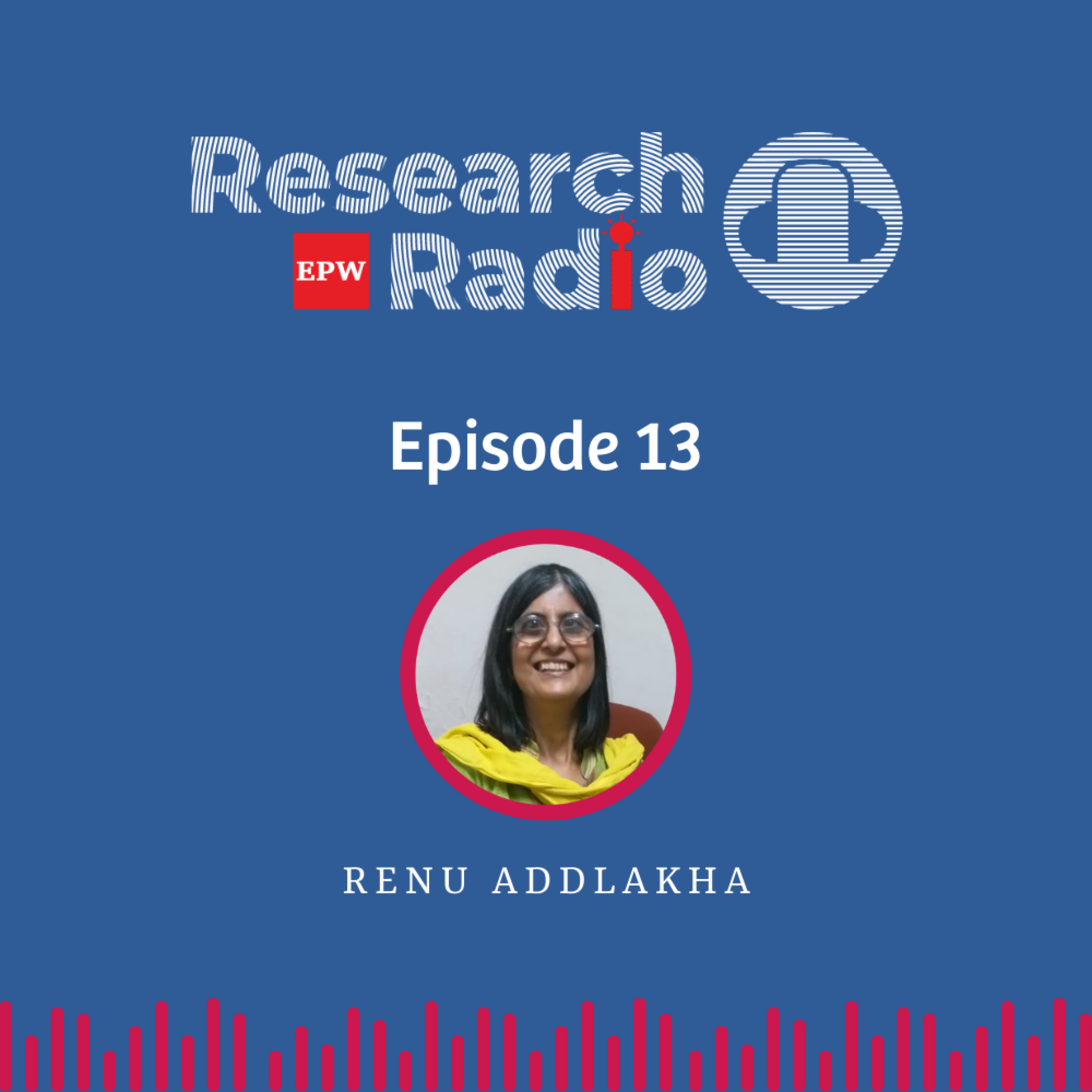
#13: Why Framing Disability as an Individual Problem is the Real Problem
Indian society is suited to meet the needs of certain kinds of bodies over others that are deemed disabled. This is made clear in multiple ways: right from how buildings are designed to the types of appearances that are idealised. However, there are important ways in which people with disabilities have contested attempts to sideline their rights.
This week we’ll speak to Renu Addlakha about w
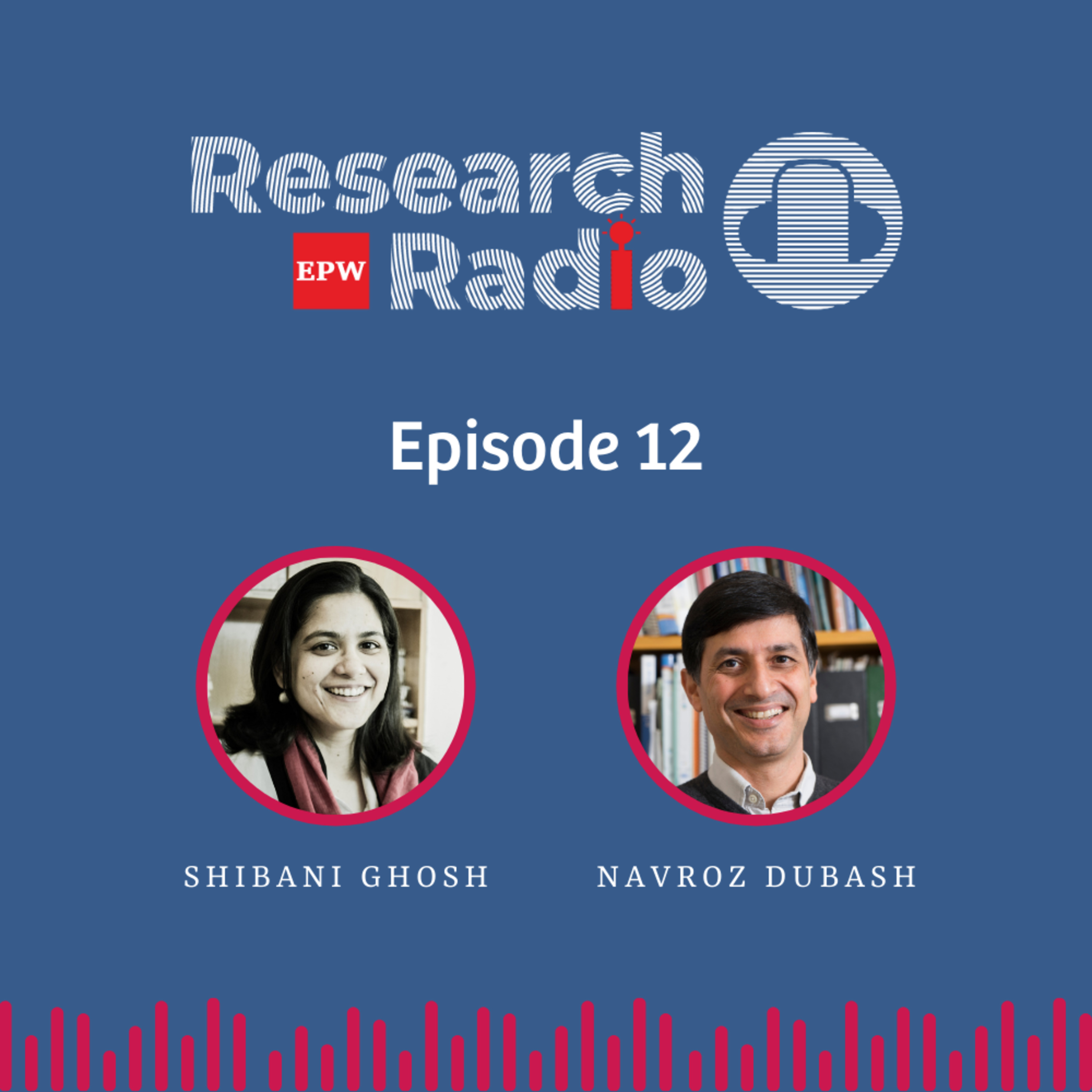
#12: How Effective are Institutions for Climate Policy in India?
India is highly vulnerable to the effects of the global climate crises, and is simultaneously now the third largest contributor of greenhouse gases in the world. To address a crisis as complex and long-standing as climate change requires effective institutions. Shibani Ghosh and Navroz Dubash join us this week to share their research examining the effectiveness of Indian institutions and
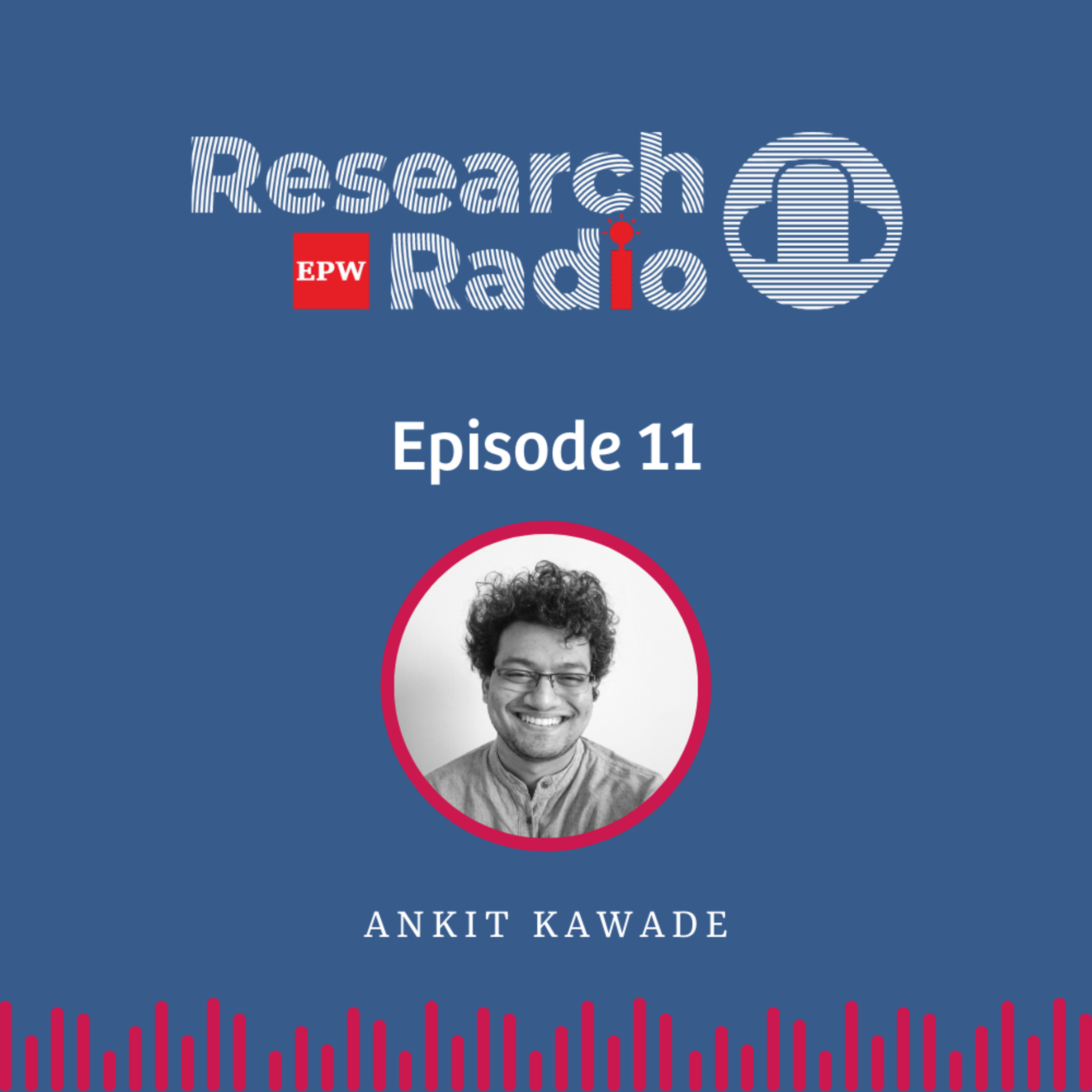
#11: The Impossibility of ‘Dalit Studies’
Colleges and universities hold the potential to transform society by raising social consciousness and enabling social and economic mobility. Historically and today, however, this potential has been constrained by accessibility barriers, deficiencies in curriculums, skewed funding allocations, among other factors. Ankit Kawade, who is an MPhil candidate at the Centre for Political Studies at the Ja

Trailer: Research Radio is back!
Our second season features a refreshed format, new graphics, and an exciting line-up of scholars. We’ll focus on five themes for this season: education, healthcare, the environment, food, and social movements. The first episode will be released on Monday, 11 January. And new episodes will be out every Monday so subscribe wherever you get your podcasts.

#10: Can NGOs Remain Effective When They Become Corporatised?
How did Bangladesh come to be known as the land of NGOs, given it hosts the largest NGO, BRAC, and the largest microfinance institution (Grameen Bank)? Anu Muhammad joins us to discuss the role of NGOs in making Bangladesh more marketised and globalised since its independence in 1971.
The insights he will share are based on an article he published in Economic and Political Weekly on 29 September 2

#9: How Have Waste Pickers in Pune Responded to Rising Privatisation and Dispossession
Who owns waste? How does waste become valuable? Rohini Sahni and V Kalyan Shankar will answer these complex questions based on ethnographic research they conducted in Pune between 2013 and 2016. They will also tell us what led people to choose waste-picking as a profession, and why these workers later collectivised for better working conditions.
The insights they will share are based on their arti

#8: Do Indians Still Practice Untouchability?
Which castes and religions practice untouchability the most? Can factors such as education and urbanisation potentially reduce the practice? Do those who practice untouchability know members outside their own caste? Researchers Amit Thorat and Omkar Joshi, who have analysed the findings of a nationally representative survey of over 42,000 households, aim to address these questions.
The insig

#7: Who is Afraid of Pakistan’s Aurat March?
Pakistan’s Aurat March takes place every year across the country to mark Women’s Day. Past demonstrations have called for accountability for violence against women by men, resources for affected women, the reclamation of public spaces for women, and much more.
The March received severe backlash from both conservative and liberal groups, and researcher Afiya Sheherbano Zia examines the criticism. S

#6: Why Do Colonial Forms of Exploitation Continue in Indian Tea Plantations?
Waking up and brewing a cup of tea, according to your preference of ginger, cardamom, amongst other spices, or stopping by your regular chai stall are a few of the ways Indians drink tea every day. Across regions, religions, caste, class and gender, Indians love to drink tea. India is the second-largest producer of tea in the world, and most of it is consumed domestically.
Researcher Virginu

#5: How Do Power Differences in Medical Interactions Affect Caste-based Discrimination?
Doctors are seen as having a high degree of knowledge and expertise about diagnosing and treating ailments. The Hippocratic Oath requires them to provide fair and equal healthcare to all. Researcher Sobin George investigates how caste impacts doctor-patient interactions in Meenkara, a village in Karnataka, with heightened Dalit consciousness.
He shares with us how India’s caste-based social order

#4: Why India’s One-size-fits-all Food Security Programme Fails to Address the Needs of Beneficiaries
How do Indians prefer accessing foodgrains under food security programmes— through direct cash transfers, the existing public distribution system or food coupons? Researchers Mamata Pradhan and Devesh Roy investigate how local power relations impact people's preferences for delivery mechanisms by surveying 1,600 households across three states. Their findings offer ways in which the current model c

#3: Citizenship Amendment Act: Exclusionary Nationhood Hiding Behind the Veneer of Liberal Citizenship
In December 2019, the Bharatiya Janata Party-led government radically altered Indian citizenship law, introducing religion as a basis for providing citizenship. How has the Bharatiya Janata Party-led government justified making this change? Author of the groundbreaking book, "Mapping Citizenship in India," Anupama Roy, shares her findings based on an examination of a parliamentary report on the bi

#2: Why Should We Be Critical about the 2018 Supreme Court Judgement Against Section 377?
A 2018 Supreme Court ruling that decriminalised queer sex was widely celebrated. Judges and petitioners framed the move as India “decolonising itself” of British legislation and beliefs. Based on an examination of the 495-pages long judgement, researcher Jason Fernandes shares with us that the court’s framing is simplistic and limited. Rather than rupture the Brahmanical nationalist pr

#1: What Interventions are Most Effective to Address Domestic Violence?
Do crises centers, that are located in every district in the country, cater to the needs of women who have experienced domestic violence? Two researchers, Shireen J Jejeebhoy and K G Santhya, aim to understand not just whether violence has reduced after women reach out to crises centers, but also if women's overall well being has improved. We'll learn about why institutional methods largely fail w
Recommended

MSME TALK

Geeta| Bhagwat | Tulsi Books| Upnishad |Ramayan|YogVashishth|Radheshyam Ramayan|Puran|Mahabharat

Personal Experiences- Hindi Adult Stories

Teluguone Daily News

Shri Krishna Kathalu by Chaganti Koteshwara Rao

GAZAL HUB

Shayari Dilkizubaan By Sansethiquotes

वो कहानियां ।। Vo Kahaaniyan ।। Horror, Supernatural & Mystery Stories
Kaalkatha -The world of stories

Aleena Dissects
The Human Thread

StartupLanes: Building Business and Raising Funds
