The History Of Bangalore
The History of Bangalore explores the city's evolution from the 4th century AD through the dynasties of the Kadambas and Gangas, princely rule, the British Raj, and Indian independence. It combines scholarly research with engaging storytelling, covering power struggles, alliances, and battles that shaped Bangalore. The podcast is hosted by Ramjee Chandran and supported by the Prestige Group.
Episodes

The Famous Mysore Silk: How it Happened
How did a kingdom stripped of its primary commercial ports transform itself into an industrial powerhouse? In this episode, Ramjee Chandran traces the origin of two defining Mysorean legacies: silk and lacquerware toys. From 12-year expeditions sent to China for silkworms to treadmill-pumped mulberry fields outside Bengaluru's old city gates, discover how Tipu Sultan built a closed-loop textile ec

The Untold Story of the Mysore Navy
Did Mysore possess a high-seas navy capable of challenging the Royal Navy? In this episode, Ramjee Chandran uncovers the history of Tipu Sultan’s 1796 naval ordinance (Hukumnamah). Moving beyond coastal defense, Tipu sought to construct a blue-water fleet, establish a Board of Admiralty, and forge a maritime alliance with revolutionary France—a bold strategic shift that directly alarmed the Britis

Tipu’s Options and the Birth of a New Mysore
Standing in the spring of 1792 with a halved kingdom and two sons held hostage in Madras, what choices remained for Tipu Sultan? In this episode, Ramjee Chandran explores the state of mind of the Mysorean monarch. Refusing to become a British vassal or bow to foreign oversight, Tipu paid his massive debt ahead of schedule and pivoted his state toward rapid industrialization, scientific innovation,

Why Did Cornwallis Not Annex Mysore in 1792?
Description:
Why did Lord Cornwallis leave Tipu Sultan on the throne of Mysore in 1792 after bringing him to his knees? In this episode, Ramjee Chandran debunks the notion that the British lacked administrative capability, proving instead that the decision to leave half a kingdom intact was a calculated move driven by strategic geography, coalition politics, and legal constraints. Discover how Cor

How Tipu Paid the Ransom. The Aftermath of Seringapatam: Part 2
How does a nation crippled by territorial losses clear a war debt worth a fraction of a global empire's annual output within two years? In this episode, Ramjee Chandran analyzes the true economic weight of the 3-crore-and-30-lakh-rupee ransom imposed on Tipu Sultan after the Treaty of Seringapatam. Uncover how Tipu avoided borrowing a single rupee by combining personal treasury reserves, severe mi

The Aftermath of Seringapatam, Part 1: The Ledger
Description:
What remained of the legendary kingdom of Mysore after the Treaty of Seringapatam in 1792? In this episode, Ramjee Chandran dives into the grim fiscal reality facing Tipu Sultan. Beyond losing half its geographical territory, Mysore lost its most profitable economic engines—the lucrative spice coast of Malabar, the strategic mountain passes of Coorg, and the seamless trade routes that

Tipu’s Sons. The Treaty of Seringapatam, Part 2
Description:
Behind the ink of formal treaties lies the poignant reality of human collateral. In this episode, Ramjee Chandran details the emotional exchange that saw two of Tipu Sultan’s young sons handed over as political hostages to guarantee a massive war indemnity. Uncover the behind-the-scenes political maneuvering by Mysorean vakeels to protect key heirs, the grand 21-gun procession to the

The Treaty of Seringapatam, Part 1
Following the successful encirclement of Srirangapatna, fighting gives way to intense, high-stakes diplomacy in a negotiation tent pitched near the Eedgah. In this episode, Ramjee Chandran details the rigorous process behind the Treaty of Seringapatam in March 1792, where Lord Cornwallis, the Maratha Confederacy, and the Nizam of Hyderabad met with Tipu Sultan’s envoys to dismantle the formidable

The Fall of Seringapatam, 1792
Nine months after a grueling retreat, Lord Cornwallis returns to the gates of Srirangapatna with the full weight of the Triple Alliance. Rather than initiating a slow, conventional siege, Cornwallis strikes under the cover of darkness, launching an aggressive infantry assault that shatters Tipu Sultan's formidable river defenses. In this episode, Ramjee Chandran details the pivotal turning point w

The Road to Seringapatam, Part 2
Following a devastating logistical collapse and a painful retreat from Srirangapatna, Lord Cornwallis discovers he is not as isolated as he feared. Just as hunger begins to dismantle his forces, an unheralded vanguard appears on the horizon, signaling a profound turn of fortune. In this episode, Ramjee Chandran charts the dramatic resurgence of the Triple Alliance. From the miraculous eleventh-hou

The Road to Seringapatam, Part 1
With Bangalore secured, Lord Cornwallis turns his sights west toward the ultimate prize: Tipu Sultan’s island capital of Srirangapatna. But a secondary fortress stocked for a year's siege serves as a stark warning that Mysore’s resources remain deeply formidable. In this episode, Ramjee Chandran chronicles the grueling, circuitous march against two ticking clocks—the impending southwest monsoon an

In The Aftermath of the Fall of Bangalore, 1791
History moves quickly to the next battle, but it rarely stops to examine the morning after. Following the harrowing midnight breach of March 21, 1791, Bangalore awoke to a transformed reality. In this episode, Ramjee Chandran takes us inside the captured fort and pete to explore the immediate, human cost of victory. From the contrasting grief of two mothers on opposite sides of the ocean to the sy

The Fall of Bangalore, Part 2: The Breach
The high-stakes gamble of Cornwallis's ghost camp pays off at dawn, exposing a hidden web of espionage and bribery run by William Read and Thomas Munro within the Mysorean ranks. But as the siege pushes toward its absolute limit, the fate of Bangalore comes down to a desperate midnight assault on March 21, 1791. In the conclusion of this two-part special, Ramjee Chandran chronicles the harrowing f

The Fall of Bangalore, Part 1: The Siege
Following the lightning-fast two-hour fall of the pete, Lord Cornwallis found himself trapped in a gruelling logistical nightmare against the strongest fortress in Mysore. From March 12 to 20, 1791, the siege of Bangalore Fort became a high-stakes chess match of engineering versus endurance. In the first of this two-part special, Ramjee Chandran details the tactical brilliance of the Madras Sapper

The Sixth Battle of Bangalore: The Fall of the Pete, 1791
While history books fixate on the dramatic midnight breach of the Bangalore Fort, the entire Mysore campaign was actually decided two weeks earlier in the blood-soaked streets of the commercial city. On March 7, 1791, Lord Cornwallis launched a brutal, house-to-house assault on the Bangalore pete—a fortified manufacturing powerhouse of over a hundred thousand citizens. In this episode, Ramjee Chan

The British March Upon Bangalore, 1791
In February 1791, Charles Cornwallis marched out of Fort St. George with a singular obsession: total redemption for his humiliating defeat at Yorktown. His target was Bangalore, the heavily fortified, stone-hewn "gatekeeper" of the Mysore plateau. But moving a massive army of twenty-one thousand troops, sixty-seven war elephants, and an unyielding battering train required an astronomical forty tho

The Diplomatic Duel at Pune 1790
Before Lord Cornwallis's army could ever march on the plateau, the outcome of the Third Anglo-Mysore War hung precariously on the decisions made inside a single room in Pune. In this episode, Ramjee Chandran takes us behind the scenes of a high-stakes diplomatic chess match. Two rival embassies—the British led by Charles Warre Malet, and Mysore led by Tipu Sultan’s top negotiators—competed fiercel

The Resurrection of Charles Cornwallis
One line is all we need in history records that Charles Cornwallis invaded Bangalore in 1791. But behind that single line lies a sweeping story of defeat, humiliation, and a decades-long struggle for redemption. In this episode, Ramjee Chandran charts Cornwallis's journey from his agonizing, ghosted surrender to George Washington at Yorktown to his arrival in India as a powerful, dual-mandate rule

Tipu and the Travancore Trigger: 1789
The five-year peace between Mysore and the East India Company was never a truce; it was simply a race to rearm. Ramjee Chandran breaks down the high-stakes geopolitical chess match that shattered the Treaty of Mangalore. Enter Lord Charles Cornwallis, a general eager to erase the shame of his surrender to George Washington at Yorktown. When the small state of Travancore strategically provokes Tipu

The Darkest Chapter of Tipu Sultan: The Malabar Atrocities
How does a man transition from a "flogged prince" to a revolutionary sovereign? Ramjee Chandran explores the formative trauma and brilliant administrative mind of Tipu Sultan. Following the death of Hyder Ali, Tipu inherited a state designed for perpetual war and set about the impossible task of making it thrive in peace. From the public humiliation that defined his sense of discipline to the crea

When Tipu Sultan was Flogged in Public: Lessons from a Father
How does a man transition from a "flogged prince" to a revolutionary sovereign? Ramjee Chandran explores the formative trauma and brilliant administrative mind of Tipu Sultan. Following the death of Hyder Ali, Tipu inherited a state designed for perpetual war and set about the impossible task of making it thrive in peace. From the public humiliation that defined his sense of discipline to the crea

The Loneliness of Tipu Sultan: No Friends, Only Followers
In this deeply personal episode, Ramjee Chandran looks past the battlefield to the man on the throne. Tipu Sultan was perhaps the most forward-thinking ruler of his age—a man of strong contrasts—yet he remained fundamentally alone. Discover Tipu's desperate, decade-long diplomatic quest to find allies in Versailles, Istanbul, and Cairo. From the "citoyen" who looked to Revolutionary France to the

The End of the Second Anglo-Mysore War
The Second Anglo-Mysore War did not end only with a British loss, but with a scene that the East India Company would spend decades trying to erase from history. Ramjee Chandran explores the final months of the conflict, where Tipu Sultan—now the sovereign of Mysore—forced the British to their knees on the coast of Mangalore. Discover the internal power struggle between the Madras and Bengal Presid

The Death of Hyder Ali
Season 3 begins with a heartbeat that has stopped, but a war that refuses to pause. Ramjee Chandran reveals the high-stakes drama following the death of Hyder Ali in December 1782. While his body lay cold, his inner circle—led by the brilliant minister Purniah—staged an elaborate deception to keep the army from fragmenting. Follow the 400-mile desperate ride of Tipu Sultan as he races to claim his

The Coveted City - A Recap 1537 - 1780: Season 2 Finale
In the grand Season 2 finale, Ramjee Chandran takes a step back from the smoke of the Carnatic wars to look at the 243-year journey of Bangalore itself. From a quiet granite plateau granted to a minor chieftain named Kempe Gowda in 1537, to the formidable "military capital" of 1780, discover why this city became the ultimate prize in Southern India. This episode bridges the gap between the fall of

The War That Shook an Empire: The Second Anglo-Mysore War, Part 2
At sixty years old, Hyder Ali was no longer just a soldier; he was a force of nature. In this episode, Ramjee Chandran tracks the devastating opening of the Second Anglo-Mysore War. From the massive descent of 90,000 men from the Bangalore plateau to the absolute shattering of British prestige at the Battle of Pollilur, Mysore reached the zenith of its military power. But as the "scorched earth" o

The Maratha Invasion and the Build Up: The Second Anglo-Mysore War, Part 1
The Treaty of Madras was supposed to be Hyder Ali’s greatest diplomatic victory, turning his enemy into his guarantor. But as Ramjee Chandran reveals, the ink was barely dry before the British East India Company proved their promises were worthless. When a massive Maratha invasion led by Peshwa Madhav Rao pushed Hyder to the brink—forcing him to take refuge behind the walls of Seringapatam—the Bri

The Victory of Hyder Ali: The First Anglo-Mysore War, Part 4
Abandoned by the Nizam and facing a British "pincer movement" on his capital, Hyder Ali was supposed to be a defeated man. Instead, Ramjee Chandran recounts one of the most brilliant military recoveries in Indian history. While the British successfully breached the fort of Bangalore in 1768, they couldn't hold the victory. Witness the tactical genius of Hyder’s "ghost march"—a 130-mile sprint to t

Terror at Tiruvannamalai: The First Anglo-Mysore War, Part 3
One hundred episodes in, and the stakes have never been higher. Ramjee Chandran details the harrowing aftermath of the Battle of Chengam and the subsequent clash at Tiruvannamalai. This is a story of psychological warfare and environmental endurance, where the torrential rains of the monsoon became as much an enemy as the opposing army. Witness the dramatic collapse of the Mysore-Hyderabad allianc

An Introduction to Tipu Sultan, The First Anglo-Mysore War, Part 2
While Hyder Ali and the British East India Company began their titanic struggle, a young man moved through the early campaigns in the shadows, watching and learning. Ramjee Chandran introduces Tipu Sultan, the figure who would become the central protagonist of the Mysore story. This episode explores Tipu's upbringing, his early military baptism at the gates of the Bangalore pete, and his surprisin

The Fourth Battle of Bangalore: The First Anglo-Mysore War, Part 1
The inevitable collision has arrived. Ramjee Chandran details the opening gambit of the First Anglo-Mysore War, where the strategic preparations of the previous years are finally tested on the battlefield. As a British-Nizam coalition marches with the explicit goal of reducing the Fort of Bangalore, Hyder Ali chooses not to wait behind his walls. Instead, he descends from the plateau to force a co

Challenging the Empire’s Domain: The Mysore Navy
In this episode, Ramjee Chandran explores how Hyder Ali sought to neutralize the British East India Company’s greatest strength: its maritime dominance. Facing a superior military power, Mysore didn't just react; it studied the problem and built a coherent, systematic response. By securing the Canara coast and establishing a formidable navy, Hyder Ali and later Tipu Sultan aimed to deny the Britis

Hyderabad, Bidanur, and the Northern Circars: Britain to Bangalore, Part 3
By 1761, Hyder Ali was the de facto ruler of Mysore, but he inherited a state that was chronically underfunded and prone to military mutiny. Ramjee Chandran explores the two strategic masterstrokes that changed everything: the conquest of the massive treasury at Bidanur and the acquisition of a coastline on the Canara coast. This episode details how these "strategic foundations" allowed Hyder to b

The “Honourable” Company: Britain to Bangalore, Part 2
In this pivotal interlude, Ramjee Chandran explores the transformation of the East India Company from a group of London merchants into a "sovereign merchant" with a global footprint. This episode tracks the shift from commerce to conquest, sparked by the hollowed-out Mughal authority after 1739. From the "transaction" of Plassey to the decisive Battle of Buxar, we witness the moment the Company ac

For a Few Pods of Pepper? From Britain to Bangalore, Part 1
How did a company of London merchants, originally obsessed with the price of pepper, end up commanding an army larger than that of most European nations? Ramjee Chandran explores the pivotal transformation of the East India Company during the mid-18th century. This episode tracks the shift from "counting house to counting territory," centered on the shockwaves of the Battle of Plassey in 1757 and

What Became of the Portuguese
Before the British East India Company could claim dominance over the Mysore plateau, an older European power had to fade into the background. Ramjee Chandran explores the decline of the Portuguese—the first Europeans to arrive in India and the first to leave its major political stage. This episode tracks their journey from the aggressive "Cartaz" naval pass system of the 1500s to their 18th-centur

The Unlikely Hero of the War of American Independence: Hyder Ali, Part 3
In one of the most unexpected chapters of global history, the fate of Bengaluru was once inextricably linked to the birth of the United States. Ramjee Chandran reveals how Hyder Ali became a household name in Revolutionary-era America. Following his crushing defeat of the British at the Battle of Pollilur in 1780, Hyder was toasted by George Washington’s inner circle as a "liberator." From Philade

The Bengaluru Pete Military Industrial Complex: Hyder Ali, Part 2
This episode reveals how Hyder Ali transformed Bengaluru from a traditional market town into a military industrial complex. No longer just a trading post, the city became a massive arsenal—a place where French technology met Indian craftsmanship to produce the world's most advanced rocketry. Join Ramjee Chandran as he explores the rebuilding of the Bengaluru Fort into its final, formidable stone f

Illiterate Soldier to Sultan: Hyder Ali - Part 1
In one of the most remarkable ascents in Indian history, an illiterate volunteer soldier with no royal lineage transformed himself into the de facto ruler of the Mysore Kingdom. Ramjee Chandran charts the meteoric rise of Hyder Ali, a man who turned personal debt and military chaos into absolute power. From the opportunistic seizure of a Nizam’s treasury to the strategic payment of a mutinous army

Nadir Shah, The Carnatic And The World That Made Hyder Ali Relevant
To understand the rise of Hyder Ali in Bengaluru and Mysore, one must first look a thousand miles north to Delhi in the year 1739. Ramjee Chandran explores the seismic shock of Nadir Shah’s invasion—a Persian whirlwind that hollowed out the Mughal Empire and sent its accumulated wealth, including the Peacock Throne, back to Isfahan on seven hundred elephants. This episode tracks how this northern

The Rise of the Dalavais
What happens to a meticulously built state when the "good hand at the wheel" is gone? Ramjee Chandran explores the three decades following the death of Chikka Devaraja Wadiyar, a period where the Mysore throne was occupied by "Shadow Kings" while real authority migrated to the military commanders. This episode chronicles the reign of Kanteerava Narasaraja II (the "Mooka Arasu"), who ruled through

Kantheerava and Chikka Deva: The Rule of Mysore Begins
Having purchased Bengaluru for three lakh gold varahas, Chikka Devaraja Wadiyar did not just become its owner; he became its architect. Ramjee Chandran explores the pivotal years between 1690 and 1704, when Bengaluru was transformed from a commercial pete into the strategic northern gateway of the Mysore Kingdom. This episode details the massive project of replacing the old mud fort with stone, th

Kannada, Rektha, Dakhni and Urdu: The Fascinating Crucible of Culture
When Chikka Devaraja Wadiyar purchased Bengaluru for three lakh gold hanas in 1690, he bought more than just real estate; he inherited a linguistic revolution. Ramjee Chandran explores how the three-year Mughal occupation of the Bengaluru fort created a "Tower of Babel" where Persian officers, Punjabi soldiers, and Marathi scribes were forced to communicate with Kannada-speaking merchants and labo

The Third Battle of Bangalore, 1687
The year 1687 remains one of the most chaotic in Bengaluru’s history. Ramjee Chandran details the short-lived but pivotal Mughal intervention that almost derailed the sale of the city. As Ekoji Bhonsle finalised the deal with Mysore, the imperial machine of Aurangzeb—fresh from crushing Golconda and Bijapur—reached out to seize the prize. Under General Qasim Khan, the Mughals occupied the fort for

Shivaji, Aurangzeb, And The Walls Close In: The Maratha Years, Part 2
The transition of power in Bengaluru often happened not through the clash of steel, but through the scratch of a pen. Ramjee Chandran navigates the complex and often overlooked chapter of Bengaluru’s Maratha years following the death of Shahaji Bhonsle. As his son Ekoji I took the reins, he found himself caught in he middle of the ambitions od Aurangzeb from the noth, his brother Chhatrapati Shiva

Shahji Bhosale in Bengaluru: The Maratha Years, Part 1
When the dust of the 1638 siege settled, a new era began under a man who was far more than a mere conqueror. Ramjee Chandran explores the twenty-six-year reign of Shahaji Bhosale in Bengaluru. No longer just a frontier outpost, the city became Shahaji’s personal jagir—a sprawling estate where he blended Maratha administration with Deccani culture. This episode delves into Shahaji’s "Gowri Mahal" p

The Second Battle of Bengaluru, 1638
The transition of power is rarely just about the clash of swords; it is often about the whispers in the tent. Ramjee Chandran breaks down the high-stakes drama of 1638, where the fate of Bengaluru was decided by a mix of relentless Sultanate artillery and the fluid loyalties of Kenga Nayaka. As Ranadulla Khan’s army tightened its grip on the mud fort, the city faced a choice: total destruction or

The Catechism of War: Bengaluru vs Bijapur
The walls that held in 1612 could not withstand the shifting tectonic plates of the 17th-century Deccan. Ramjee Chandran chronicles the dramatic and somber turning point of 1638, when the Adil Shahi Sultanate of Bijapur set its sights on the prosperity of Bengaluru.
This episode talks about why Bijapur decided to attack Bengaluru. And presents a fascinating look the two armies about to fact each

The First Battle of Bengaluru: 1612
Success has a way of inviting a target. Ramjee Chandran details the moment Bengaluru’s rapid rise as a cosmopolitan trade hub finally collided with the harsh realities of Deccan power politics. By 1612, the pete was no longer just a market; it was a desirable acquisition target for jealous neighbors. This episode focuses on Immadi Kempe Gowda (Kempe Gowda II) and his defining test: a massive confe

The Death of Kempe Gowda I
What happens to a city when the singular authority that willed it into existence vanishes? Ramjee Chandran explores the enigmatic end of Kempe Gowda I. While the Aravidu dynasty struggled to maintain a shadow of the Vijayanagara Empire from Penukonda, Kempe Gowda faced a "strange duality"—the freedom of a weakening center balanced against the rising suspicion of an imperial court looking for someo
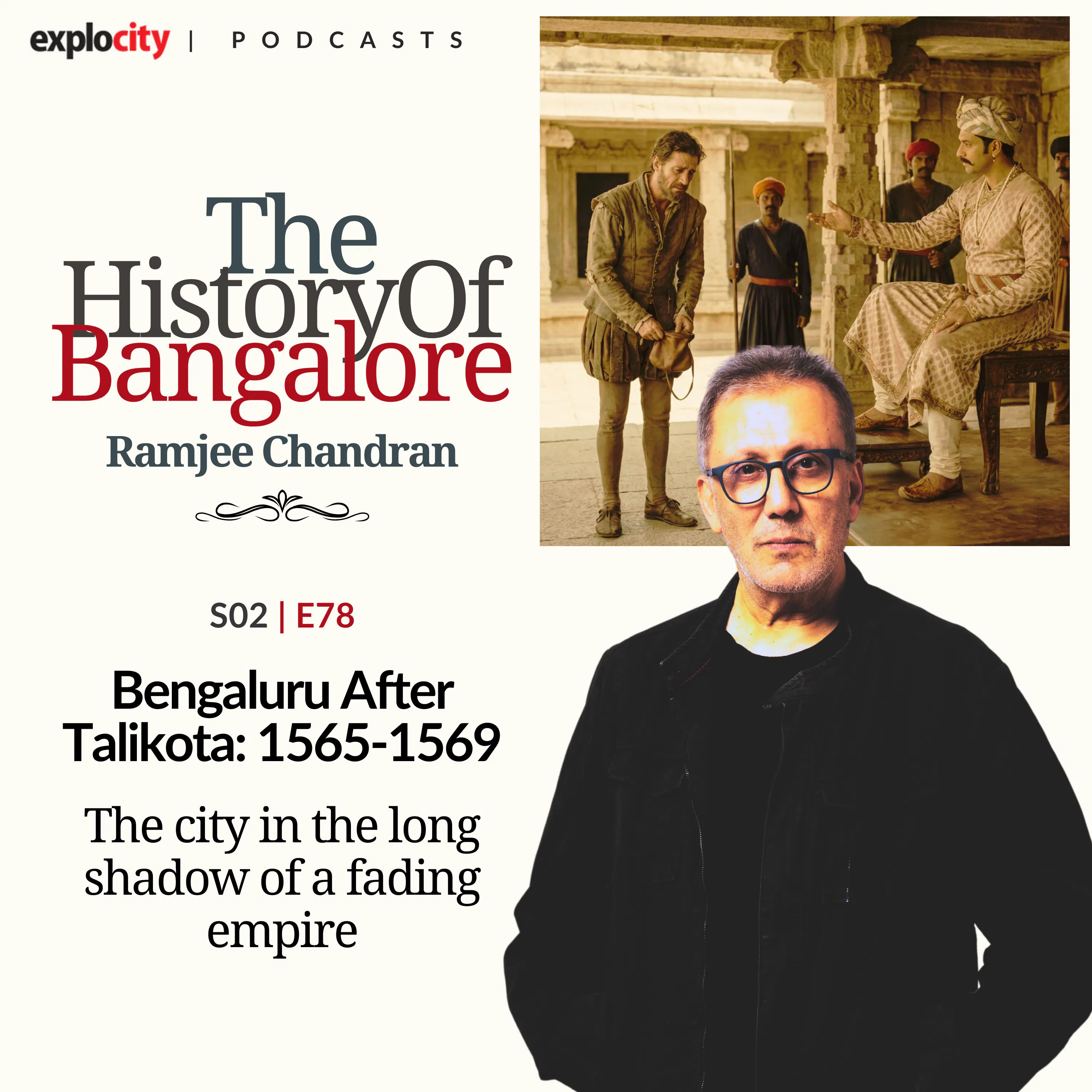
Bengaluru After Talikota: 1565-1569
As the Vijayanagara Empire splintered into a "political looseness" following the catastrophe at Talikota, Bengaluru didn't just survive—it adapted. Ramjee Chandran examines how Kempe Gowda navigated the transition from imperial subject to autonomous ruler in an era of "untethered freedom". This episode explores the pragmatic nature of Bengaluru’s founder, who had the foresight to maintain the city

The Great Vacuum: The Aravidu Ascent and the Splintering Empire
The collapse of the Vijayanagara center at Talikota didn't just end an empire; it created a political vacuum that was similar to the one left by the Hoysalas two centuries earlier.
Ramjee Chandran explores the historiography of this transition—how the political vocabulary of imperial authority persisted even when the centre could no longer bark orders. This episode follows the Aravidu family as

After Talikota: The Sack of Vijayanagara
The defeat at the Battle of Talikota was only the beginning of the end. Ramjee Chandran chronicles the "ooru alivu"—the systematic erasure—of one of the world’s greatest metropolises. As the battlefield lay thick with the carnage of fallen empires, the Vijayanagara royals, led by Tirumala, executed a desperate exodus, loading 1,550 elephants with a treasury of gold and jewels to flee toward Penuko

The Tale from Talikota: The Battle of Rakkasagi-Tangadgi: 1565
We stand on the north bank of the Krishna River to witness one of the most consequential and bloody battles in history: the Battle of Rakkasagi-Tangadgi, popularly known as Talikota.
Ramjee Chandran details how the vast coalition of the Deccan Sultanates—Bijapur, Ahmadnagar, Golconda, and Bidar—marched south in early 1565 to challenge the dominance of the Vijayanagara Empire. As the two massive

Tall Poppies, And A Small Minded Man
Vijayanagara stood at the absolute height of its prosperity in the late 1550s, yet the character of its leadership had begun a dangerous shift toward petty arrogance. Ramjee Chandran explores the "Tall Poppy Syndrome" that defined Aliya Rama Raya’s rule—a philosophy of cutting down anyone who rose too high, from capable local administrators like Kempe Gowda to neighboring sovereigns. This episode

The Tuluva Dynasty Falls. And Rama Raya’s Toxic Politics: 1540-1545
The Bengaluru Pete's prosperity was put on hold by the severe political crisis at the imperial capital of Vijayanagara. Ramjee Chandran details the unraveling of the Tuluva dynasty following the death of Emperor Achyuta Raya in 1542. The episode chronicles a decade of palace coups and assassinations—including the murder of Achyuta's son, Venkata I—as powerful factions, particularly the one led by

The Rise And Imprisonment of Kempe Gowda: 1537-1542
The Bengaluru Pete was a runaway success; by the early 1540s, it was regulating itself and thriving with a robust internal economy. Ramjee Chandran details how this local prosperity coincided with a profound political crisis at the imperial capital of Vijayanagara. With the empire strained by internal power struggles and the growing dominance of Aliya Rama Raya, Kempe Gowda's regional success was
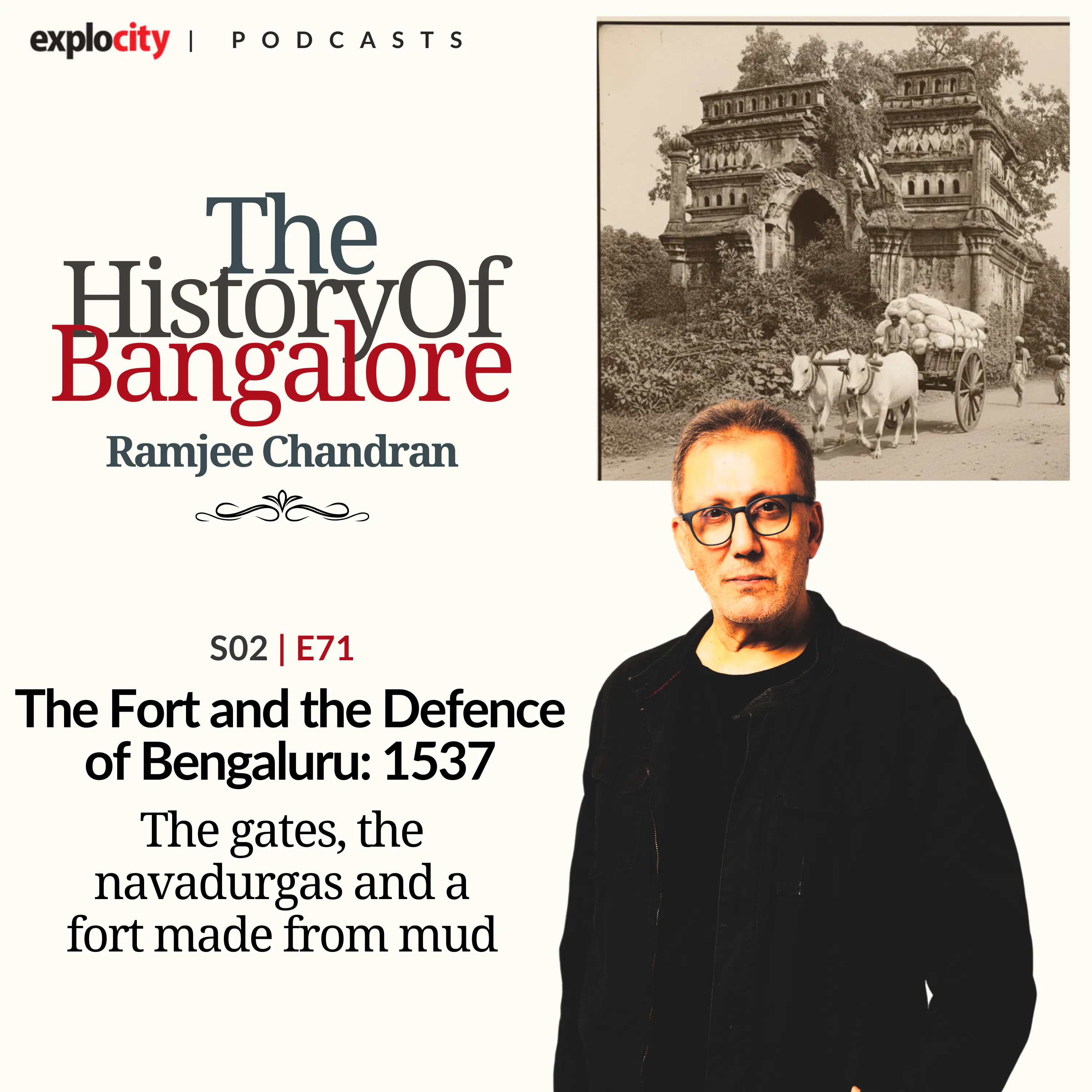
The Fort and the Defence of Bengaluru: 1537
The establishment of the Bengaluru Pete was an act of both commerce and defence, necessary for survival in the volatile 16th-century Deccan. Ramjee Chandran details how Kempe Gowda’s security plan was dual-layered: relying regionally on the shield of the nine surrounding hill forts, the Navadurgas, and locally on the fortified enclosure. The central feature was the Bengaluru Fort, but imperial pol

The Building of Bengaluru Pete: 1537
We step into the year 1537 to witness the spectacular groundbreaking of the Bengaluru Pete. Ramjee Chandran joins Kempe Gowda as he lays the foundations of the new city, beginning with an auspicious ceremony where four pairs of milk-white bulls ploughed the first furrows. These lines became the city’s two main arteries: the wide north-south wholesale axis of Doddapete, and the narrower east-west r

A Blueprint for the Bengaluru Pete: 1537
The founding of Bengaluru is a period of history "deceptively difficult to reconstruct," relying on fragmentary evidence from local documents. Ramjee Chandran details Kempe Gowda's comprehensive strategy to found the Bengaluru Pete, overcoming a period "almost entirely without reliable records." The blueprint leveraged geography for success, starting with the defensive shield of the Navadurgas and

The Birth of Bengaluru: 1531-1537
While the Vijayanagara Empire under Achyuta Raya was wrestling with northern turmoil, constant friction with Bijapur, and Portuguese unease in the 1530s, the Mysore plateau remained a quiet, profitable hub for trade. Here, the local chieftain, Kempe Gowda, saw the empire's crisis as a rare opportunity and an indicator that the center would soon fail to hold. Ramjee Chandran details how Kempe Gowda

The Estimation of Achyuta Raya: 1529-1531
Following the death of Krishnadeva Raya in 1529, his brother, Achyuta Raya, inherited an empire fraught with danger. Ramjee Chandran explores the immense challenge of succeeding the legendary emperor, facing enemies at the gates, a cooling relationship with the Portuguese, and the looming political threat of Aliya Rama Raya. The episode examines why history, particularly through the lens of Portug

Krishnadevaraya Part 7: 1520-1529 — The Death of Krishnadeva Raya
The epic story of Vijayanagara's greatest king reaches its tragic conclusion. This episode traces Krishnadevaraya's final decade, from the hubris of his triumph at Raichur to his death in 1529. Ramjee Chandran follows the emperor from the sacking of Bijapur and the capture of Gulbarga to the heartbreaking decline marked by the death of his only son, the suspicion of betrayal and the hasty blinding

Krishnadevaraya Part 6: 1515-1520 — The Raya Owns The South
In this sixth episode of the mini-series, we explore the final, triumphant stage of Krishnadevaraya's eastern campaigns and his journey to the zenith of his power. This episode details the fall of Rajahmundry, the final confrontation with the Gajapatis of Odisha at Cuttack, and the diplomatic negotiations that followed.
Ramjee Chandran also recounts the dramatic Battle of Raichur, where Krishnad

Krishnadevaraya Part 5: 1513-1515 — The Campaign Into Andhra
In this fifth part of the mini-series, we follow Krishnadevaraya's longest and most arduous military campaign. Ramjee Chandran details the strategic move eastward, focusing on the years 1513-1515, as the emperor sought to conquer the Andhra region and secure the fertile deltas of the Krishna and Godavari rivers. The episode chronicles the sieges of the formidable forts of Udayagiri and Kondavidu.

Krishnadevaraya Part 4: 1510 — Response to the Portuguese. Strategy? Or Miscalculation!
In this episode, Ramjee Chandran explores the pivotal events of 1510 and Krishnadevaraya's strategic decision not to oppose the rising Portuguese power. The episode details the Portuguese takeover of Goa from the Bijapur sultanate and the roles played by Alfonso de Albuquerque and minister Timmarasu. By examining the political landscape of the time, the episode delves into the central question of

Krishnadevaraya Part 3: 1510-1512 — At The Core Of His Calculus
Ramjee Chandran continues his mini-series on Krishnadevaraya's reign, exploring how the new Vijayanagara emperor navigated a world in flux, both within his empire and globally. This episode highlights Krishnadevaraya's strategic genius in navigating the complex political landscape of the Deccan, which was fractured into five sultanates and faced the new threat of the Portuguese. The episode detail

Krishnadevaraya, Part 2: 1509-1512 — Krishnadeva Raya Proves His Mettle
In this second part of the Krishnadevaraya series, Ramjee Chandran takes us into the early years of the emperor’s reign — a period of uncertainty, risk, and revelation.The year is 1509. The Portuguese have just defeated a powerful naval coalition off the coast of Diu, shifting the balance of power along the Indian Ocean. The Deccan sultanates are still a threat, the Gajapatis of Odisha remain unde

Krishnadevaraya Part 1 - The Beginning: 1509
Ramjee Chandran introduces the extraordinary reign of Krishnadevaraya, the Vijayanagara emperor who ascended the throne in 1509. This episode delves into the legends surrounding his rise, including the dramatic tale of the goat's eyes, and examines his pragmatic approach to kingship. More broadly, it places Krishnadevaraya's era within the context of monumental global shifts of the 16th century: t
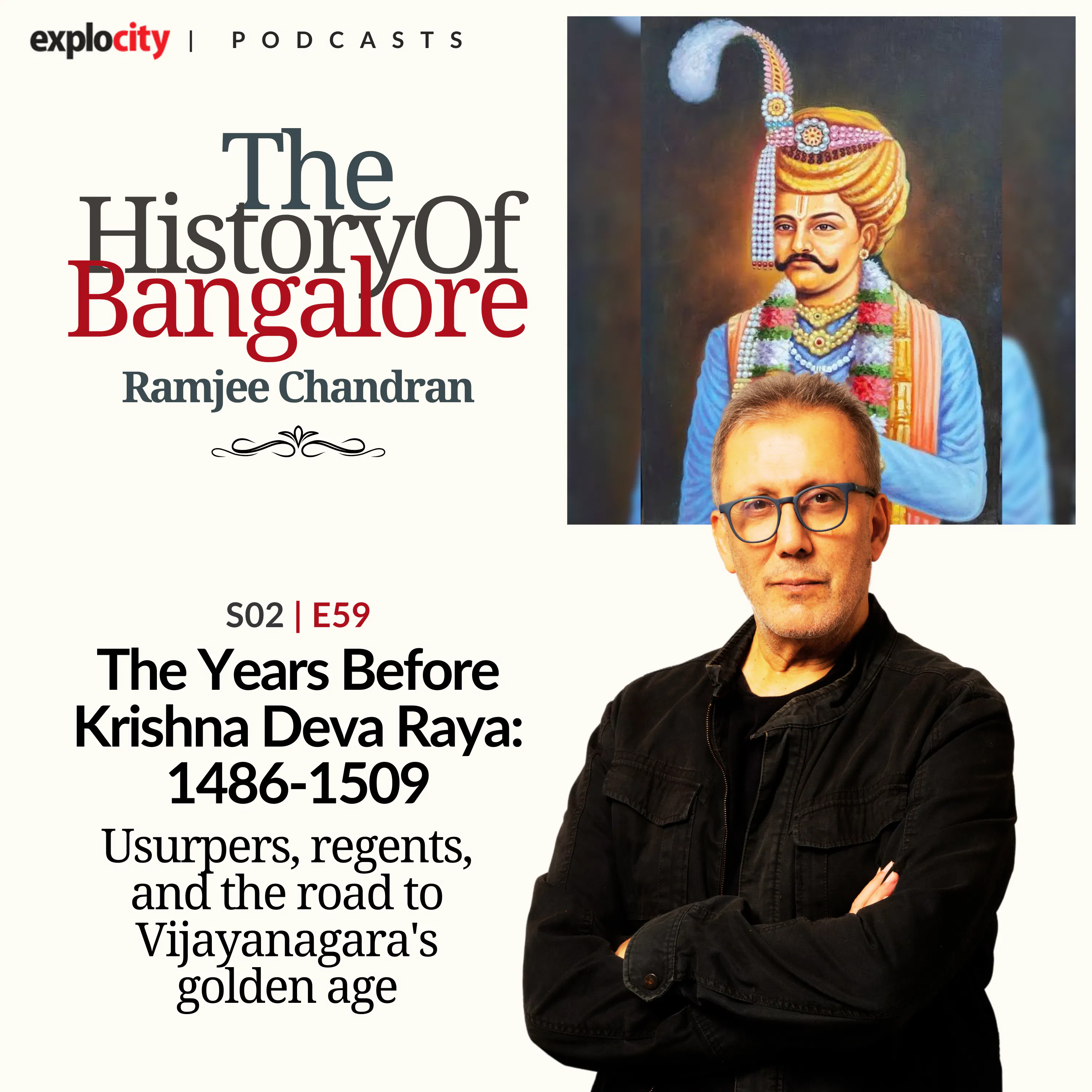
The Years Before Krishnadevaraya-1486-1509
Saluva Narasimha’s dramatic seizure of the Vijayanagara throne may have rescued the empire — but it did not restore its stability. In this episode, Ramjee Chandran explores the fragile legitimacy of Narasimha’s rule, the chaos that followed his death, and the rise of his trusted general, Narasa Nayaka. As the Saluva dynasty crumbles with the murder of Narasimha’s elder son Timmabhupala and the imp

Whose Story? Power, Perspective, and the Writing of Deccan History
In this insightful interlude, Ramjee Chandran steps back from the historical narrative to examine how the history of the Deccan has been recorded and interpreted over time. Explore the evolution of historical writing from ancient inscriptions and Persian chronicles to British colonial accounts and modern scholarship. Understand how political agendas, religious biases, and cultural perspectives hav

Saluva Narasimha - The Man Who Single-Handedly Saved Vijayanagara: 1460-1500 AD
Ramjee Chandran shines a spotlight on Saluva Narasimha, the general who rose amidst the chaos of Vijayanagara's declining years to become its saviour. Explore his early life, his strategic military campaigns against the Gajapatis and the Bahmanis, and his crucial role in stabilising the fractured empire. Discover how his decisive actions, often overlooked in favour of later rulers, prevented the c
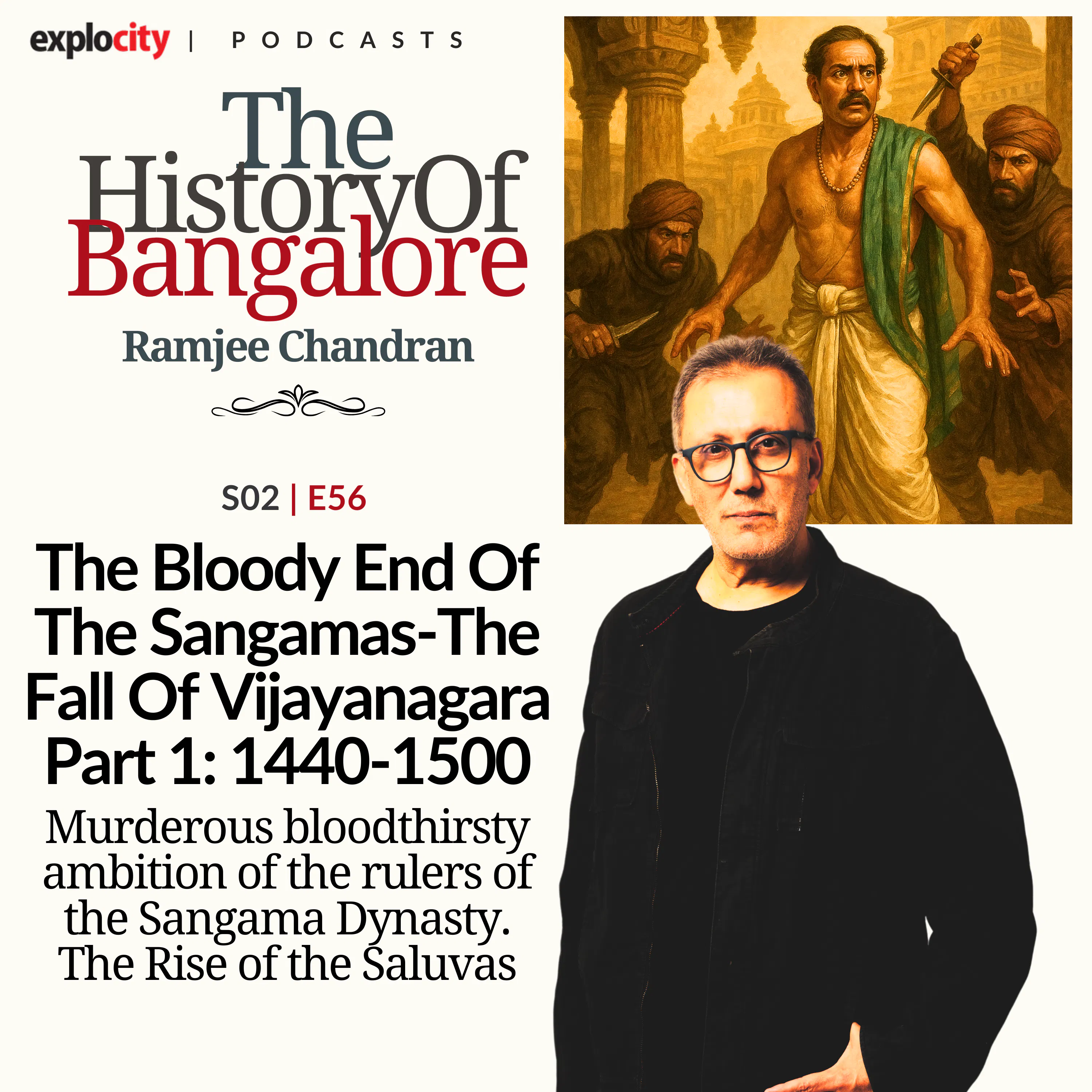
The Bloody End Of The Sangamas-The Fall Of Vijayanagara Part 1: 1440-1500
As the Vijayanagara Empire begins to crack under the weight of internal decay and reckless rulers, the stage is set for upheaval—and opportunity. This episode journeys through the chaotic years before Kempe Gowda I’s ascent, when intrigue, betrayal, and ambition reshaped the Deccan. From the decadent reign of Virupaksha II to the gritty rise of Saluva Narasimha, and from the slow unraveling of the

Three Strands of History: Vijayanagara, the Mysore Royals, and the Kempe Gowdas (1433-1513 AD)
Ramjee Chandran weaves together the intertwined histories of Vijayanagara, the Mysore Wadiyars, and the Kempe Gowdas during a period of significant change. Explore the grandeur of Vijayanagara, the political machinations of Deva Raya II, and the shifting power dynamics in the Deccan.
Delve into the early lineage of the Wadiyars, the legends and realities of their rise, and the consolidation of th

The Wadiyars and the Yelahanka Nada Prabhus - Part 2: The New Rulers (1399-1513 AD)
The story of the Yelahanka Nada Prabhus unfolds alongside the rise of the Mysore Wadiyars—two families shaped by the shifting power dynamics of the Vijayanagara Empire. In this episode, Ramjee Chandran explores the role of local chieftains, the legends surrounding these dynasties, and the political landscape that defined their fate. From the last days of the Hoysalas to the dominance of Vijayanaga

The Yelahanka Nada Prabhus - Part 1-Origins: 1399 - 1513
Ramjee Chandran begins Season 2 by revisiting captivating tale of the Gowda clan's migration to the Yelahanka region. Discover the legend of Doddamma, the dramatic migration from Alur, and the clan's journey along the Palar River. Explore the historical context as the Gowdas establish their rule and lay the foundations for Kempe Gowda I's legacy. This episode delves into the origins of a dynasty t

Season Two Curtain Raiser. 1399 to 1799: The Rise And Fall Of Bengaluru
Get ready for an epic journey through 400 years of Bangalore's history. In Season 2, Ramjee Chandran explores the city's transformation from Kempe Gowda I's grand pete to the arrival of the British. Witness the rise of the Wadiyars, the conflicts with the Bahmanis, Marathas, and Mughals, and the dramatic era of Hyder Ali and Tipu Sultan. Discover how trade, ambition, and global powers influenced t

Season Finale: The Rise Of Kempe Gowda And The Birth of Bangalore: 1509-1537 AD
All journeys must pause before they continue. In this season finale Ramjee Chandran brings together the threads of history that led to the founding of Bengaluru. We step into the grandeur of Krishna Deva Raya’s court, witness the empire’s twilight as the Deccan Sultanates close in, and watch as vassals like the Wadiyars and Kempe Gowda rise to stake their claims in history.
Bangalore’s story is on

Two Centuries In Vijayanagara: 1336-1509 AD
Join Ramjee Chandran as he navigates the complex history of the Vijayanagara Empire, from its contested origins to its consolidation of power. Explore the early reigns of Harihara and Bukka, the rise of the Bahmani Sultanate, and the shifting narratives surrounding this influential kingdom. Discover how Vijayanagara filled the power vacuum in the Deccan, setting the stage for the golden age of Kri

How The West Discovered Vijayanagara: 1336 AD
Embark on a journey to uncover the origins of the Vijayanagara Empire. From its rediscovery by European surveyors to the legendary tales of its founding, we explore the historical context that shaped this powerful dynasty. Delve into the early days of Harihara and Bukka, and witness the seeds of an empire that would reshape the Deccan. Ramjee Chandran explores the theories around its founding, and
Recommended

Shri Krishna Kathalu by Chaganti Koteshwara Rao

GAZAL HUB

Shayari Dilkizubaan By Sansethiquotes

वो कहानियां ।। Vo Kahaaniyan ।। Horror, Supernatural & Mystery Stories

Kaalkatha -The world of stories

Aleena Dissects

The Human Thread

StartupLanes: Building Business and Raising Funds

Little Fixes- Women's Mental Health & Personal Growth

CIO Leadership Live: India

Iti Itihaas

The Dark Psychology
